Featured

7 Key Steps to Respond to Gaslighting

Art by @crazyheadcomics

Do any of the phrases in the image sound familiar? Do you feel like your thoughts, emotions, perceptions, and sanity are challenged in your relationship? Do you feel like you are living in a giant contradiction machine? If you answered yes to the above, your partner could be a narcissist and is actively gaslighting you in your relationship.

Narcissistic Personality Disorder

The Diagnostic and Statistical Manual of Mental Disorders (DSM-5) places narcissism under the category of narcissistic personality disorder. Narcissistic personality disorder is a mental condition in which people have an inflated sense of their own importance, a deep need for excessive attention and admiration and a lack of empathy for others. Narcissists also have very low self-esteem and very fragile egos. Although they may seem confident, they struggle greatly in this regard, and their relationships tend to be affected immensely. Signs and symptoms of narcissistic personality disorder and the severity of symptoms vary. Your importance is valued by how well you are meeting the needs of the narcissist. Once you no longer meet the narcissist’s excessive needs, you lose all value and prominence in the relationship.

Signs of Gaslighting in Relationships

A narcissist has certain behavioral patterns that highlight their gaslighting tactics. These behaviors include:

  • Blame  This tactic is employed to allow a narcissist to maintain control of a situation by not taking accountability for their actions and twisting things around to where you are at fault for their behavior.
  • Self Doubt — Narcissists instill self doubt in you and your mental faculties when discussing your feelings, mental state, physical appearance, and competency.
  • Manipulation of events — Narcissists dismiss, divert, disagree, or ridicule your memory of events. This often includes a complete rewrite of actual events.
  • Targeted crazymaking phrases — Narcissists will use phrases such as too sensitiveoverreactingI never said that or crazy when you try to speak about how low they make you feel or how your needs are not being met in the relationship.
  • Consistent Lying — Narcissists tend to blatantly lie but will never admit to lying. They create a rationale for the lie making it true in their own twisted minds. Lies are used as part of the narcissist’s toolkit to maintain control and create a false narrative about your character.
  • State of Confusion — Narcissists remove clarity from conversations, speaking in “word salad” and/or ambiguities increasing their ability to twist future situations.
  • Projection — Narcissists tend to transfer their actions to their partners by accusing their partners of their wrongdoings ( e.g., cheating, lying). The partner, in turn, finds themselves defending themselves for things they did not do.
  • Buildup and Tear Down — A narcissist will actively flatter you and criticize you at the same time. This causes you to stay in a constant state of cognitive dissonance questioning if the narcissist is a loving, caring person deep down or truly a mean spirited and deceitful human being.

Gaslighting is psychological warfare. It undermines everything you believe about who you are and what you are capable of to the point that you begin to believe what the narcissist says to you as truth.

How To Successfully Respond to Gaslighting In Your Relationship

7 Key Steps to Respond to Gaslighting:

  1. Learn the traits of gaslighting.
  2. Spend time alone to recollect and deal with your emotions when your memories have been questioned.
  3. Hold onto your recollection of events. Don’t let the narcissist reprogram your memory.
  4. Gather evidence. Take pictures, record audio or take notes following conversations.
  5. Speak with family and friends. Get their perspectives on your recollection of events.
  6. Speak to a licensed therapist to help build your mental strength.
  7. Focus on self-care and taking care of your mental health.

Final Thoughts

Remember, the goal of a narcissist is to make you question your own thoughts and memories through gaslighting. They want to distort your reality. Gaslighting causes one to doubt their gut feelings and recollection of events.

If you have feelings of self doubt, apologize for everything that goes wrong in your relationship, are often confused, unhappy, and not your typical logical self, then seeking professional help is essential to safeguard your mental health. Having that outside professional perspective can highlight things you are unable to see due to your connection to the narcissist. Once you learn to look at the narcissist in a more detached way, their gaslighting tactics will become less impactful allowing you the opportunity to take more deliberate action on how to respond and what to do about your relationship.

Featured

Reclaiming My Life After Narcissistic Abuse

Life in an abusive relationship isn’t something we ever think about until it happens to us. We grow up believing it could never happen to us. We tell ourselves that’s something that happens to “those people”. We fool ourselves into believing we’d never put up with behavior that makes us feel less than someone else.

These are great ideals, but unfortunately, for many people, like me, it’s a pipe dream. Through no fault of our own, some end up in relationships like this. The toxicity with niceties, attention, kind words, overt acts of love like gifts, trips, and all the sweet things that bring smiles to our faces.

Soon, those niceties become few and far between. What was once loving looks turns to scowls. The kind words are replaced by name calling, insults, threats, and outright frightening declarations. While shocking at first, it’s amazing how quickly this abhorrent behavior becomes our new normal. We make excuses as our abuser chips away at our self-esteem, makes us question ourselves, and fundamentally changes our perception.

Some people live with this for decades. Some, like me, leave… eventually. But unfortunately, leaving doesn’t always end the abuse. The abuser will sometimes find a new way to manipulate or control you. The system that’s designed to help you sever ties and clean up loose ends also works against you.

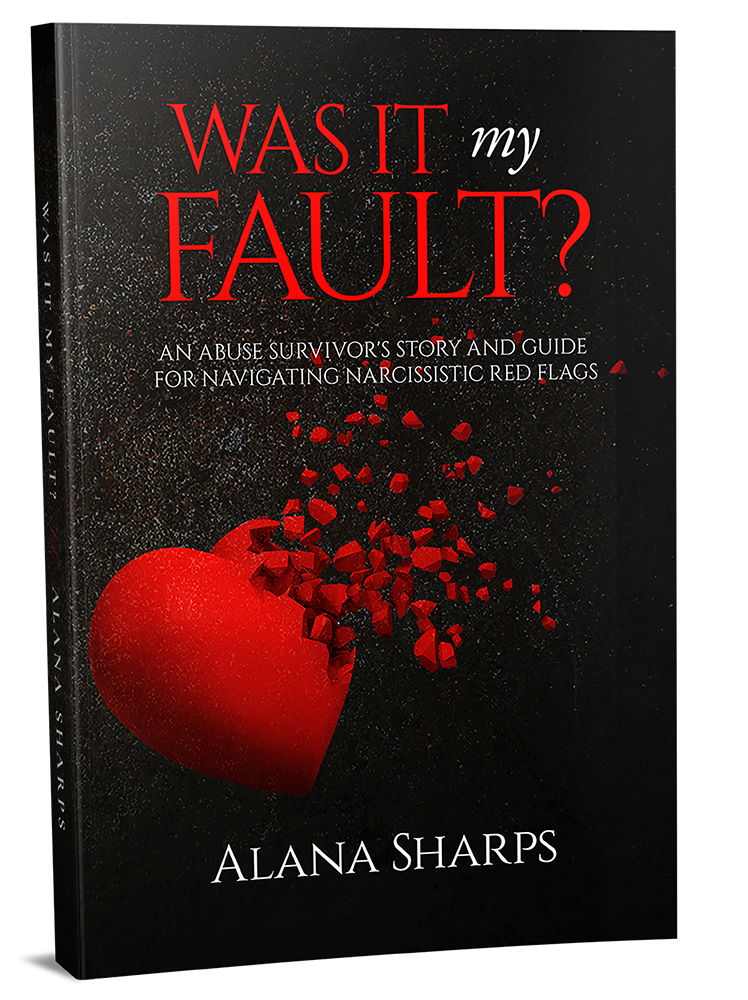
My book, my story, chronicles my journey from an abusive relationship to fighting for my life back and the aftermath of taking a stand. While not a pretty story, this raw account is meant to help anyone, who is living in this near-impossible situation, navigate the sometimes-confusing road ahead. Whether it be the legal system or beyond, I know it would’ve been helpful to have a roadmap to help me navigate this treacherous terrain.

After surviving narcissistic abuse and fighting to get my life back, improve my self-esteem, and reclaim the pieces of me that had been chipped away after sixteen years in a toxic relationship, the last thing I needed was another battle for what was rightfully mine. When the legal system is set up to work against you and not take your best interests into account, where do you turn?

My book outlines the steps I took and those I encourage those I consult to take. While I’m not an attorney, I know from experience what worked for me. It’s my hope that my book, my story, my journey will provide inspiration, help you create a roadmap to the next chapter of your life, and provide you with the tools you need to succeed on the other side of an abusive relationship.

Was it My Fault, now available. Click here to order my book.

5 Ways Narcissists Manipulate Their Partners

couple on beach, sunset, silhouette
Photo by Eric Ward on Unsplash

Narcissists are self loathing, vulnerable individuals. They can’t stand to be alone with their own thoughts and need the constant attention and admiration from others to feel good about themselves. While they constantly seek admiration for their well being, they emotionally abuse and manipulate their partners to conform to what they want.

Here a five tactics narcissists employ to manipulate their victims

  1. Blame Shifting

Narcissists love to shift the blame when they are being held accountable for hurting your feelings. They shift the focus from themselves and change the subject to something you did to them in the past or some imperfection you have. This tactic then forces you to question your contribution to causing this problem ultimately having you take an unnecessary amount of responsibility for something you actually did not do. It is masterful deflection they have turned into a well-honed skill.

2. Invoking Emotion

Narcissists use emotion to hijack your empathy. They will manufacture elaborate heartfelt stories of how someone in their past or present wronged them, used them or harmed them. They will often use tears and a solemn tone to further invoke your empathy for their predicament. No one cries faster than a narcissist trying to manipulate someone into doing something they want. Invoking that emotion plants them firmly as a victim in the eyes of the empathetic witness and removes any question or challenge of their part in the story.

3. Excessive Criticism

Everything the narcissist loved about you during the “love bombing” or courting phase of the relationship is an issue now that you are a couple. The independence that they loved and admired is now a pain point for the narcissist to criticize. The criticism becomes frequent and a consistent reaction to situations where there is a disagreement. Your qualities that were once adored or accepted are now flaws that impact their lives to the point where they have to constantly remind you of your issues. Thus, they rise higher as you sink lower and in that elevated state, they can do no wrong.

4. Repetitive Statements

The narcissist will push your boundaries to get you to see things their way by using repetitive statements such as, “I don’t understand why you can’t do this?” Regardless of how many times and ways of explaining why you won’t or can’t do something, they refuse to listen. You eventually give into their point of view just to stop the verbal attacks. That acquienesene becomes the lynchpin to controlling you. They now have the power to essentially beat you down into doing what they want just to keep the peace.

5. Guilt Tripping

The narcissist will make you feel guilty for wanting to spend time with friends and family or have “me” time. Things such as getting your hair or nails done, going to lunch with a friend, or getting a massage will be seen as “cheating” with someone else or being a neglectful wife or mother for wanting a life outside of your relationship. This guilt is designed to do one thing and one thing only — force you to essentially give up any sense of self and do everything for this person (first out of love and now out of guilt). This tactic allows the narcissist to define and place value on you rather than you having your own sense of self worth.

Narcissists are notorious for emotionally beating their partners down through coercive control tactics used to make their partners comply with what they want. When combined, these five tactics make for a powerful and effective strategy that they will apply again and again. The challenge for you is to recognize these five tactics and take action. It will not be easy but it is worth the effort.

Alana Sharps is a Certified High Conflict Divorce and Child Custody Consultant and International Best Selling Author of the book, Was it My Fault.

Was I Dating Another Narcissist?

Photo by Shifa Sarguru on Unsplash

After being married to a covert narcissist for sixteen years, it took me some time before I was ready to get back out and date. I wanted to focus on myself and heal from the psychological damage prior to letting anyone new into my life. I was very cautious with the men I met, paying close attention to how they spoke and treated me during our initial interactions.

My Unicorn

I tried to protect myself from making another mistake of dating a narcissist by purposely not talking about my likes, dislikes, wants or dreams to prevent men from mirroring me to make themselves look compatible. When I finally met someone of interest, I asked him a series of well thought out questions for two weeks straight. Questions like, what do you do when you are angry, what’s the main thing you want to accomplish in the next five years and what are your love languages? As I got to know him, he seemed very unique. Different from any man I met in the past from the way he thought and analyzed things. I began to call him my “unicorn”. The more questions I asked, the more I was drawn in by his appeal.

He told me he was a “giver” and “confident” man. Not confident in an arrogant way, but confident in himself and what he brought to a relationship. He was a “giver” in how he liked to treat the women in his life and his understanding that you need to constantly date a person while in a relationship to keep the connection and spark. All great things that lured me in.

Our Relationship

I let my guard down. This can and will happen depending on the situation. As the weeks progressed, the conversations became somewhat boring. I stopped bombarding him with questions and he didn’t spark up intellectual conversations. We lived in two different states, therefore, the phone was our only means of staying connected. I tried to include him in things going on in my life to get his valued opinion. If I didn’t specifically ask for his guidance or opinion, he didn’t engage in the conversation or he would change the subject. Even in conversations where I explicitly expressed something was bothering me, he didn’t engage. A characteristic I chose to let slip by in the beginning. However, I began to notice how he loved to talk about himself and his day. If I didn’t actively engage in the information he was sharing, he expressed that I wasn’t showing interest in him or his well being.

Red Flags

He gave me an engraved jewelry box two months into our dating. I thought it was a sweet gesture. However, when I received another engraved jewelry box six months later for Christmas, I realized he didn’t know anything about what I liked or disliked. I don’t wear jewelry. When I questioned him on what he knew about me, he got silent for a moment and then replied “no”. He immediately tried to rectify his response by spewing out a number of irrelevant things he claimed I liked which were all things he “liked”. It was very apparent at that moment that he knew nothing about me nor did he care.

Additional red flags that arose over the course of our relationship were the instances of gaslighting. If I expressed certain things he said were mean or hurtful, he immediately replied with, “you took it wrong”. When expressing my feelings on how he made me feel low or invalidated, he told me what I did to him (blameshifting). He also couldn’t handle constructive criticism and often raised his voice in frustration when I simply questioned aspects of things he brought up in conversation for further understanding. However, the biggest red flag was his use of the silent treatment and he used it often. The silent treatment is a common tactic used by narcissists to control and punish people when they feel slighted.

Was I dating another narcissist?

We didn’t date long enough for me to make a full assessment based on prior experience; however, I did notice enough red flags to say he definitely exhibited narcissistic traits.

The challenge you have to face in this scenario is two-fold:

  1. Are you being vigilant enough to see the red flags as they are raised?
  2. Once you see them, what will you choose to do or what action will you take?

Hopefully, you won’t have to go through every dating experience after surviving a narcissist living “on alert”. However, paying attention to signals, and trusting your new, stronger, more aware and confident self, means you’ll be better equipped if you do encounter a narcissistic personality again. You now know what it looks like, feels like and what you are most certain of — is that you will not let anyone break you down again.

Was it My FaultAn Abuse Survivor’s Story and Guide to Navigating Narcissistic Red Flags. Click here to order.

My Transformation Out of Narcissistic Abuse

sad woman in despair
Photo by Anh Nguyen

My Soulmate 

In 2002, I married my soulmate — the man I dreamt about meeting since I was a little girl. The man who was perfectly in sync with my thoughts and feelings. The man who knew just what to say and how to say it to make me feel like the most special woman in the world.

Slowly, that loving and considerate man began to change.  I was married to a charming, charismatic man to the outside world who demeaned and abused behind closed doors. My husband became manipulative and controlling, making me feel guilty for any and everything that went wrong in his life or made him feel devalued. He began to demand all of my time and grew angry if he didn’t receive it. I stopped doing activities with friends to please him. I began walking on eggshells, thinking about every action and choosing my words carefully to avoid conflict. If I didn’t do what he wanted, when he wanted, or how he wanted it done, I was belittled and called selfish. Whenever I expressed things he was doing to me in the relationship that invalidated my feelings, he turned the conversation around to what I did to him. It was always about him, his wants and his needs. He was never satisfied no matter how much I tried to please him and everything was continuously my fault. The real truth about him was that he didn’t become this man.  He was already like this, masking his true self when we met. 

Lack of Empathy

Whenever I was sick and required medical attention, he was angry with me complaining he had to take me to urgent care or the ER never showing any compassion for my well being.  Yet, he demanded I show empathy and take care of his every need when he was sick. He expected rewards and compliments for taking care of his children. If I decided to treat myself to a hair day or nail day, I was called a horrible mother for thinking of myself and leaving him to watch the children.

I hit my lowest point when my husband had an affair and decided he didn’t need me anymore. An affair he blamed me for because he didn’t feel “loved”. His verbal abuse ramped up to nightly rants in an effort to force me into signing a separation agreement I didn’t agree with. I lost eleven pounds during this time. I couldn’t eat because my stomach was a roller coaster not knowing what each day would entail, I couldn’t sleep because he kept me up all night ranting, and I couldn’t think straight due to sleep deprivation. I had to threaten to call the police one night during one of his rages because he just wouldn’t let up no matter how much I asked him to stop. He told me he was wasting his time being with me.  I served my purpose and he was ready to move on. I was a selfish, vindictive bitch for forcing him to stay when he didn’t want to be with me.  

When the mistress decided to leave and return to her husband, my husband mourned her for months often crying in bed at night. He began to accuse me of cheating. He constantly complained about the number of texts and phone calls I received to the point that I resorted to always having my phone on vibrate. I began to call my family and friends during my commute to and from work to connect with the outside world. He checked my phone records and called back numbers on my phone he didn’t recognize. If I was five minutes late coming home from work, I was automatically accused of being with another man and kept up all night having a senseless argument over seeing a man that didn’t exist. 

I lived in mental chaos for years until I looked at myself in the mirror one day and didn’t recognize the woman I had become. I was frail and weak with no identity. I lost myself conforming to a man who repeatedly emotionally and verbally  abused me.

The Transformation

After 16 years, I made the decision to leave the relationship. I was once a strong, independent, ambitious and vivacious woman who became mentally broken and living with PTSD. I wanted a safe environment for my children; and I wanted “me” back.  The moment I stepped foot into my tiny two bedroom apartment, was life altering. I closed my eyes as tears rolled down my face in joy while I stood in silence enjoying the peacefulness of freedom. It was the most freeing and uplifting experience of my life as if 200 pounds had been lifted from my shoulders and I could breathe again. 

As I collected my thoughts and cleared my head over the days that followed leaving my abuser, I began to devise a plan to heal my mind, body, and spirit. 

Here are some of the tools I used to identify, address and overcome my situation. 

  • I began to read and educate myself on the signs and symptoms of emotional and verbal abuse putting a name to what I experienced 
  • I discovered therapeutic journaling as a way to heal from my experience. Performing a mental brain dump of my entire relationship often crying as I put words to paper
  • I saw a nutritionist and got on an eating plan to heal my body from years of chronic stress
  • I started an exercise plan to assist with my mental health and mood
  • I began meditating ten minutes before bed every night to clear my mind for restful sleep. Something I wasn’t accustomed to getting
  • I made a list of ten affirmations to state every morning in the mirror before leaving for work to rebuild my self esteem and confidence 
  • I wrote a list of goals I wanted to accomplish over the next year to begin making up for all the years of lost time
  • I created a list of activities I wanted to do over the next six months
  • I scheduled time with family and friends to reconnect and spend quality time

Was it My Fault, An Abuse Survivor’s Story and Guide to Navigating Narcissistic Red Flags. Click here to order.

The Issue of Race While Married to a Narcissist

Photo by Clay Banks on Unsplash

There are many things you have to deal with while being married to a narcissist. With all of the gaslighting, blame shifting, emotional and verbal abuse a narcissistic relationship entails, that’s enough to handle just by itself. But, when you’re an interracial couple and your partner is a narcissist, there’s an additional challenge to endure. Especially, when you are an African American female married to a Caucasian male in America. That challenge can create even more difficulty after the relationship ends. Unexpected challenges that could not be predicted but were there all along and present themselves over time in the most toxic ways.

The Beginning

I met my ex-husband through online dating. He was from small town America with a population so small it couldn’t even be defined as a city. Needless to say, there was little to no diversity in this town and more than likely a lot of very old stereotypes helped lay the foundation for this community. The local high school science teacher actually taught the kids African Americans can jump high playing basketball because they have an extra bone in their feet. I don’t know if it was his fascination with people of color or his curiosity that enticed him to date outside of his race but whatever the reason he set his sights on me.

His first interracial relationship was with a Hispanic female in high school. His parents immediately put the hammer down on that relationship citing, “she was using him.” She was from a poor family and he could do better was the narrative. “Poor’’ meant a minority wrapped in an economic status that placed the woman of his affections as a negative just by existing in her racial makeup and current economic state.

Fast forward, five years later and I meet this innocent looking young man on a dating site. He doesn’t list his location as his small town, he lists the location he’s moving to. My city, over 500 miles away. He moved to my city not long after we met online. We met, we dated, and we fell in love. Or, so I thought. There were a number of red flags along the way that really made me question if he ever really loved me. When you consider how narcissists prey on their potential victims and become everything a potential mate is looking for in a significant other, it really makes you question the true authenticity of your relationship. It’s been said that narcissists are incapable of love and based on my experience, I’m inclined to believe that.

The Stigma of Interracial Dating

When my ex-husband first introduced me to his family. His mother was immediately dismayed. What would the neighbors think was her first reaction? Then, she went into the stigma of the kids and how society would never accept them. We were essentially intentionally sending our kids to damnation by choosing to bring them into this world. She cried for days and days constantly trying to convince her son to break up with me (one of many red flags I missed — narcissistic mother). Now, on top of all the issues of being with a narcissist, you now have the additional toxicity of racism added to it.

The Narcissist Emerges

As the years progressed, I noticed changes in the man I married. He became very controlling and emotionally abusive although at the time, I didn’t know what to call what I was experiencing in my marriage. I thought his maltreatment of me was my fault. He also displayed extreme favoritism to our daughter and treated my son horribly.

As my son progressed into his teenage years, he began to grow his hair out and became interested in hip hop music. “You need to cut your hair,” my ex-husband would repeatedly tell him. “Why do you have that ‘fro?” “Turn off THAT music!” If my son turned on a hip hop or R&B song on the radio in the car, the station was immediately changed. “We’re not listening to that nonsense!” My ex-husband would sneer as if my son was doing something wrong or illegal. Etched into these behaviours and responses is the family that enabled him and perpetuated stereotypes that he never relinquished, despite the fact that he married and had children with me. In some way, he was saving me by marrying me and taking me into a new, better status. In reality, I was the upgrade that uplifted his social and economic status.

Racial Identity Denied

When I tried to teach my kids about African American history and their culture, I was immediately shut down. “Why does everything have to be about race?” He would often say denying my kids a part of who they were. He even went so far as to put their racial identity as “white” on application forms whereas I always identified them as both races never denying their racial makeup.

My children grew up terrified to be themselves in their own home. In addition to having to survive the consistent put downs and live up to the unrealistic standards set by their father, they couldn’t embrace their own identities. They scurried to turn off music if dad walked into their room and changed the TV station if it was tuned to an urban show. Everything they enjoyed related to their culture had to be a secret to avoid dad’s wrath.

Not only did my children have to grow up dealing with a father who went into narcissistic rages at the drop of a dime, gaslighted and made them feel inadequate in every shape or form, but they grew up having to hide their racial identity in their own home. Something no child should ever have to experience.

Newfound Strength

I finally found the strength to leave my marriage after 16 years of abuse. I am proud of my children for finding their own identity despite the roadblocks their dad threw at them along the way. They continue to learn about their African American heritage and are finally free to be themselves. I still feel guilty for subjecting my kids to years of abuse, but I can’t beat myself up forever. I too was trying to survive in a household where you continuously walked on eggshells trying to avoid that next episode of narcissistic rage terrifying you into submission.

Was it My Fault, now available. Click here to order my book.

The Detrimental Impact of the Narcissistic Parent

Most women desire the fairytale relationship portrayed in movies. There’s this highly gratifying and comforting sense around the Hollywood version of love. You fall in love with prince charming, get married and start a family or some variation of that theme. However, in reality, sometimes that prince charming turns out to be a wolf in sheep’s clothing. It completely catches you off guard wondering what went wrong and how to fix it. Prince charming, to your surprise, is a covert narcissist. Charming and charismatic to the outside world almost to the point of a fictional comparison. Behind closed doors, the princely robes come off to reveal the monster underneath. 

The Scapegoat and the Golden Child

As you start building your family, you begin to see more subtle changes in your spouse. One child is overwhelmingly doted on and placed on a pedestal while another child is treated like a trash bin collecting all of the narcissist’s negative feelings. He specifically decides based on his own arbitrary rules who gets to be golden and who gets to be the scapegoat. 

The scapegoat is blamed for everything that goes wrong in the narcissist’s life. They are made to feel inadequate and nothing they do is ever right in the narcissist’s eyes. The golden child, on the other hand, is the “perfect” one. Nothing they do is wrong, and they are the apple of the narcissist’s eye. When they misbehave, they are never disciplined while the scapegoat is overly disciplined even in the face of evidence where both children are responsible.

As their mother, you see the difference in how they’re being treated. You voice your concerns to your spouse who gaslights you into believing you are crazy. You’re also caught up in your own battle of survival trying to avoid bouts of narcissistic rage by walking on eggshells in the presence of the narcissist. All it takes is one phrase or utterance to set the narcissist off. 

The Aftermath

Siblings in a narcissistic family are bonded by emotional trauma. They experience psychological warfare that most people wouldn’t understand or believe based on the covertness of the narcissist. The children’s sense of self-worth is so psychologically beaten out of them that it takes a long time to get it back if they are fortunate enough to do so.

The covert narcissistic parent is subtle in their emotional abuse of their children, using insinuations and subtle daggers difficult for their children to recognize. The kids are left with the impression that they aren’t good enough because they aren’t doing whatever it is the narcissistic parent is visualizing in their head. Unfortunately, the children then end up confused from the gaslighting, making them feel like a failure or inadequate, needing to strive harder to earn the love and approval of the narcissistic parent. This is exactly the goal of the covert narcissistic parent. To make new supply/victims, suppress opposition and create chaos. To them, children are and will be used as tools for the narcissist’s needs.  

The golden child develops a scattered sense of identity. Their narcissistic parent’s thoughts and feelings become their own, interfering with the child’s proper development of self. The parent expects the child to mirror all of their traits, and the child, wanting to please the parent, follows suit. The child has difficulty with their own thoughts, feelings, and opinions and typically has difficulty thinking for themselves. As a result, the child struggles with boundaries. Since the parent has no boundaries with the child, the child either grows up with zero boundaries and gets taken advantage of by others, or has such strong boundaries that they don’t let anyone in.

The scapegoat acts out in school, lashes out at others and develops extremely low self esteem. They feel that everything they do is wrong and nothing they do is ever enough.

Both children often develop severe anxiety anticipating the next narcissistic rage and wanting to avoid it at all costs, trying to conform to whatever the narcissist wants or needs. This anxiety bleeds into their everyday interaction with others. 

The children also typically develop severe depression and have suicidal thoughts. Both the golden child and the scapegoat lack self-esteem from constant criticism, demeaning remarks, and subliminal messages thrown at them from the narcissistic parent. If the children are not provided mental health therapy during childhood, their trauma can lead to trouble in their adult life. Most children require trauma therapy from a trained trauma therapist, preferably familiar with narcissism, to heal from their childhood upbringing. 

Narcissistic parents psychologically damage their children


Was it My Fault, now available. Click here to order my book.

Photo by Kat J on Unsplash

Attempting to Leave the Narcissist

You were swept off your feet when you first met spending every possible moment with your new love. A fairytale story of everlasting love reminiscent of a Hallmark movie. You felt like you were the only person in the world for them…their soulmate. 

However, suddenly things changed…

You began to be belittled and made to feel less than. You communicated the poor treatment to your partner and how it made you feel. Yet, your feelings were unheard and invalidated. Everything that went wrong in your partner’s life was your fault. The missed job promotion, ability to purchase their favorite car, or the forgotten orange juice your missed during your grocery trip. The once constant loving attention and focus on you disappeared as if you were an object just to be used and abused. 

As time went on, the put-downs became unbearable, but you hung in there waiting to see a glimpse of the person you fell in love with. The person who made you feel so special that you couldn’t imagine finding that type of love again.

They have to be in there somewhere right?

The Truth Revealed or Behind the Mask

Little did you know that you were dealing with a skilled manipulator. A narcissist. Someone who spent their entire lives creating a non-existent image to lure people in. A charismatic persona that charmed everyone they met. Often perceived as the perfect friend or mate to the outside world, a narcissist is far from that. They keep their emotional and psychological abuse closeted behind closed doors.

You desperately tried to change yourself to appease your partner. Often to the detriment of your mental health and physical well-being. You began to question everything you said walking on eggshells to avoid the episodes of narcissitic rage. If you stopped doing this and started doing that, you told yourself over and over. If you fixed everything they complained about, you would see the person you met and fell in love with again. You so desperately needed to see that person again to prove to yourself, that you were not crazy.

However, that day never came. Your partner continued to complain about everything you did and didn’t do while raising the bar of satisfaction higher and higher. As you slowly seeped into depression and had enough, you attempted to leave.

But, your partner was not done with you. They needed you to feel good about themselves. They needed you to make them feel whole, wanted, and loved. Your needs didn’t matter, but theirs did. Therefore, they pulled you back in with promises of changing their behavior. They made you feel guilty for attempting to leave making you question your decision. They began love bombing you all over again as they did when you first started dating pulling you back into the vortex of the narcissistic abuse cycle. 

You began to think … am I the crazy one?

Was it My Fault, now available. Click here to order my book.